Selasa, 24 April 2018

Kebangkitan Zakat( filantropy) : Antara kebangkitan Civil Society Sistem di indonesia dan awal mula runtuhnya Hegemoni komunis-Imprealis- kapitaslis


Kebangkitan Zakat( filantropy) : Antara  kebangkitan Civil Society Sistem di indonesia dan  awal mula runtuhnya Hegemoni komunis-Imprealis- kapitaslis
Oleh : Tri Aji Pamungkas
Kordinator FoSSEI Regional Jabodetabek dan Penerima Beswan Baituzakah Pertamina


Hasil gambar untuk kebangkitan zakat bazma               Francis Fukuyama, pemikir Amerika asal Jepang, bahkan mengklaim dengan hancurnya komunisme awal 1990-an, peradaban Kapitalisme telah menjadi babak akhir sejarah (the end of history). Tapi apakah kehancuran komunisme berarti kehebatan kapitalisme? Nanti dulu. Mantan Presiden AS Richard Nixon sendiri tak begitu yakin akan kemampuan kapitalisme. Dalam bukunya Seize the Moment, Nixon menceritakan pertemuannya dengan Presiden Soviet Kruschev. “Anak cucumu nanti akan hidup di bawah naungan komunisme,” kata Kruschev kepada Nixon. Lalu Nixon menjawab,”Justru anak cucumu yang nanti akan hidup dalam kebebasan.” Nixon pun berkomentar,”Saat itu aku yakin apa yang dikatakan Kruschev salah, tapi aku justru tak yakin dengan ucapanku sendiri dalam usman 2003.46.
Tidak bisa disangkal Sistem politik ekonomi Barat adalah sistem rusak, baik politik ekonomi dalam negeri maupun luar negerinya. Kerusakannya ada pada dua aspek : Pertama, pada sistemnya secara normatif (fikriyah); Kedua, pada praktiknya secara empiris (amaliyah). Sumber kerusakannya terpulang pada ide sekularisme, yang melenyapkan aspek spiritual (nahiyah ruhiyah) dalam politik dan ekonominya hanya menonjolkan pertimbangan materi.
 Tak jauh berbeda dengan Sistem ekonomi kapitalisme yang didasarkan pada asas kebebasan, meliputi kebebasan kepemilikan harta, kebebasan pengelolaan harta, dan kebebasan konsumsi. Asas kebebasan ini, menurut Thabib tidak layak karena melanggar segala nilai moral dan spiritual. Bisnis prostitusi misalnya dianggap menguntungkan, meski jelas sangat melanggar nilai agama dan merusak institusi keluarga. Kerusakan sistem ekonomi kapitalisme juga dapat dilihat dari berbagai institusi utama kapitalisme, yaitu sistem perbankan konvensional, sistem perusahaan kapitalisme (PT), dan sistem uang kertas (fiat money). Berbagai krisis ekonomi dan moneter seringkali bersumber dari sistem-sistem tersebut.
Sedangkan Sistem ekonomi Islam, sangat bertolak belakang dengan sistem ekonomi kapitalisme. Asasnya adalah wahyu yang selalu mengaitkan Aqidah Islam dengan hukum-hukum ekonomi. Jadi barang dilihat dari segi halal dan haram, bukan dari segi bermanfaat atau tidak. Bisnis prostitusi yang dibolehkan kapitalisme, dianggap ilegal karena hukumnya haram dalam Islam.
Salah satu bukti kebangkitan ekonomi islam adalah dengan adanya semangat flantropy baik zakat, infaq sedekah dan wakaf. Baik yang bersifat produktif atau yang bersifat kebutuhan utama. Dan uniknya dalam perkembangan dunia zakat di bangun dari civil society power bukan dari pemerintah. Sampai saat ini setidaknya ada 560 lembaga zakat yang terdaftar di Badan amil zakat dan direktorat jendral pemberdayaan zakat infaq sedekah dan wakaf, hampir di setiap wilayah regional indonesia memiliki badan amil zakat. Dan kekuatan lembaga zakat saat ini di proyeksikan oleh badan amil zakat nasional memiliki potensi 286 triliun rupiah atau hampir setara dengan 3 anggaran tahunan kementrian di indonesia.
Kekuatan filantropy islam menunjukan adanya eksistensi civil society ke permukaan dan menunjukan bahwa masyarakat memiliki keuatan secara finacial apabila melakukan konsolidasi dan menyatukan kekuatan publik menjadi sebuah lawan kuat dari hegemoni imperialis,komunis dan kapitakis yang selama ini membayangi perekonomia di indonesia.
Dalam berbagai diskusi tentang pentingnya dan peran filantropy islam dalam pembangunan ekonomi bangsa sangat di harapkan dapat memberikan efek positif terhadap perbaikan ekonomi umat yang salah satunya dari zakat. Zakat menjadi role model dalam perbaikan ekonomi umat yang komprehensif karena secara sistem Alquran seudah memberikan acuan dan jobdesk penting terhadap target pemanfaatan dana zakat dan itu merupakan bagian dari target pemerintah juga dalam mengentaskan kestabilan sosial di masyarakat.
Menjaga melindungi kepercayaan masyarakat terhadap dunia filantropy adalah tugas penting bagi lembaga untuk menjadikan sebuah tatanan lembaga yang baik dan bernilai transparan untuk menjaga sustainblitas lembaga.
Bangkitanya dunia zakat atau filantropy islam merupakan bagian dari meningkatnya kepercayaan masyarakat dan beralihnya kepercayaan publik terhadap islam dan awal mula runtuhnya sistem kapitalis dalam kegiatan ekonomi di indonesia. Namun patut di waspadai bebrapa hal kebijakan pemerintah yang tidak memihak terhadap kekuatan civil society akan menimbulkan cambukan bagi kebangkitan ekonomi islam khusunya dalam hal ini zakat. Sebagai salah satu contoh yang mungkin perlu di perjuangkan adalah sinergitas undang-undang pajak dengan undang-undang zakat dalam hal ini ada beberapa poin yang perlu di harmoniskan terutama dalam memberikan intensif bagi setiap masyarakat untuk berbuat kebaikan.

Gaya kepemimpinan Presiden, Kinerja Pasar dan efek nya dalam persaingan Global


Gaya kepemimpinan Presiden,  Kinerja Pasar dan efek nya dalam persaingan Global
Oleh : Tri Aji Pamungkas Al-Azhary
(Cordinator FoSSEI Regional Jabodetabek )


Hasil gambar untuk gaya kepemimpinan SBY JOKOWI         Jakarta , 24 April 2018, indonesia mengalami pertumbuhan rata-rata 5% dalam 3 tahun terakhir. Meskipun tumbuh sebetulnya masih kalah dengan negara Laos, Kamboja , Philipina dan Vietnam dalam masalah pertumbuhan. Dari 10 negara di Asean indonesia menempati posisi ke 7 dalam pertumbuhan ekonomi wilayah, hal ini tentu sangat disayangkan disamping potensi pertumbuhan indonesia yang diperkirakan melambung tidak dimanfaatkan pemerintah.
            Apabila dilihat dari historical pertumbuhan ekonomi jauh menurun di banding dengan era kepemimpinan sebelumnya, daya beli dan kebutuhan serta gaya kinerja pasar juga memiliki titik jenuh di era kepemimpinan presiden Jokowi berdasarkan pengamatan dan observasi pasar rata-rata.
Ada beberapa hal subtansial yang harus dimiliki oleh seoarang pemimpin negara dalam menunjukan kestabilan pasar dan kestabilan sosial. Bebrapa hal yang unik dibahas dalam hal ini ketika era kepemimpinan Presiden SBY yang memiliki karismatik dan gaya bicara elegan dalam mengatasi kondisi tertentu sangat memberikan efek positif kepada kondisi pasar saat itu dengan pertumbuhan rata-rata 5,94% meskipun di tahun 2009 mengalami kondisi yang sangat buruk dalam ekonomi namun pasar dibuat enjoy dan merasakan ketentraman karena ada kepastian pasar dan stabilitas komunikasi politik yang sangat berpengaruh terhadap kondisi ekonomi dan alasan pasar. Hal ini yang menyebabkan kita bisa melewati krisis 2008-2009 dengan santai tanpa merasa ada krisis sedangkan dibelahan negar lain mengalami guncangan yang baik.
            Berbeda dengan apa yang dilakukan oleh Presiden Jokowi pada era kepemimpinanya tanpa ada penilaian subjektif dari penulis. Kondisi pasar dibuat memiliki stigma negatif dengan adanya beberapa pernyataan dan komunikasi pemimpin negara terkait dengan kebijakan. Beberapa hal terkait dengan adanya kejadian peraturan menteri perdagangan, meneteri perekonomian dan peraturan launya yang cenderung pemimpin acuh tak acuh dan seperti tidak mengatuhui serta sikap seperti membiarkan kebijakan tanpa adanya koordinasi. Secara tidak langsung hal ini memberikan paradigma pasar terutama dunia investasi sangat khawatir terhadap kondisi pasar di indonesia dan hanya sebagian yang mengganggap baik dalam hal ini.
            Bagaimanapun dalam hal ini gaya kepemimpinan dan sikap seorang pemangku kebijakan akan memberikan dampak positif dan negatif pada kondisi pasar. Kebijakan pemerintah yang diawali dengan image buruk akan merembet pada kebijakan lain dan akan membuat stigma buruk pada masyarakat.
Dalam praktiknya kegiatan pasar seorang pemimpin mampu memberikan kebaikan dalam melakukan kolaborasi perbaikan pasar dalam negeri. Selain itu seorang pemimpin mampu mebrikan citra positif dan menjaga stabilitas negara dengan sikap dan kebijakan yang memiliki kebermanfaatan lebih terhadap masyarakat yang ada di indonesia. Sebuah kebijakan yang menarik yang dilakukan di era kerajaan sultan abu ja’far al mansur di era  abbasiyah dengan memperhatikan track record dan memperhatikan kekuatan penduduk yang ada mampu melangkah jauh dibanding dengan kerajaan existing pada saat itu.
Kebijakan partisipatif dan freindlyship pemerintah seharusnya di dasarkan pada aspek kemaslahatan masyarakat banyak dan meikirkan seluruh komponen masyarakat. sangat di sayangkan apabila kebijakan hanya di dasarkan pada aspek besaran masyarakat yang memiliki harta maka kondisi negara dengan sendirinya mendekati sikap neokolonialisme dengan sistem ekonomi sebagai salah satu jembatanya.

Senin, 23 April 2018

SHARI’AH AUDITING: A REVIEW OF SHARI’AH AUDIT PRACTICES IN ISLAMIC FINANCIAL INSTITUTION (IFIs)

SHARI’AH AUDITING: A REVIEW OF SHARI’AH AUDIT PRACTICES IN ISLAMIC FINANCIAL INSTITUTION (IFIs)

Azwan Abdul Rashid, Masdiah Abdul Hamid, Ahmad Subhi Mohamad Sidek, Wan Mohammad Taufik Wan Abdullah, Inaliah Mohd Ali
Department of Accounting, Universiti Tenaga Nasional, Pahang, Malaysia


Hasil gambar untuk sharia audit review problem        The introduction of the Shari’ah Governance Framework (SGF) for Islamic Financial Institutions by Bank Negara Malaysia (BNM) on 1 January 2011 has brought immediate attention to both academicians and practitioners alike on the importance of Shari’ah governance. A major challenge for Shari’ah auditors toward the implementation of the SGF is the requirement for the auditor to possess adequate knowledge of Shari’ah to ensure that Islamic Financial Institutions (IFIs) operate in accordance with Shari’ah principles. According to Yaacob and Donglah (2012) the Islamic finance industry has grown at a rate of between 15%-20%, a rate easily exceeding the world economic growth rate.
          It is therefore of crucial importance that Shari’ah auditors are able to play their role in ensuring that activities and operations carried out by the Islamic finance industry are subject to proper checks and balances and that their reporting is in line with Shari’ah principles. The presence of an auditor is perceived as fundamental for the quality of financial reporting and is an important element in the process of securing corporate accountability. From a conventionalauditing perspective, the auditor is required to critically examine and evaluate whether the financial statements are prepared in accordance with GAAP and any relevant financial reporting framework. 
         On the other hand, Shari’ah auditing of IFIs requires the Shari’ah auditor ensure that management is not only fully adhering with GAAP and with the relevant reporting framework, but also ensure that management follow the Shari’ah framework to ensure a sound and effective internal control system accordance with Shari’ah principles in achieving the ultimate objective of Shari’ah (Yaacob & Donglah, 2012). The Shari’ah auditor is not only required to conduct a review of IFI activities in accordance with Shari’ah principles; he is also responsible for expressing his opinion on the IFI financial statements (AAOIFI, 2004; Mohammed Sarea & Mohd Hanefah, 2013). To perform his auditing role effectively, a Shari’ah auditor should possess adequate and appropriate Islamic knowledge (AAOIFI, 2004). Yaacob and Donglah (2012) argues that a Shari’ah auditor has a similar role to that of the Muhtasib (Hisbah member), a role that is related to the concept of Taklif (accountability and responsibility) in ensuring that the IFIs strictly follow Shari’ah guidelines.
                        The existence of modern Islamic institution globally is over 50 years (Yaacob, 2012). The development of IFIs is purpose to provide benefit and value for society. In line with conventional development, people have realised that traditional method is not enough for them to capture the real activities of the business. Contradict with traditional system; Islamic system has captured a new dimension for society to perceive the value of accountability. Thus, proper auditing system in Islamic view is a basis for the IFIs to achieve their main objective in achieving the Maslahah to the Ummah. However, the absence of proper Shari’ah guidelines and standards is a major problem facing the current Shari’ah auditing framework (Kasim, Ibrahim, Hameed, & Sulaiman, 2009). 
                  Additionally, lack of system pertaining to Shari’ah auditing also contribute to the failure of IFIs system in Malaysia. Therefore, regular independent Shari’ah audit in IFIs are necessary as people are now experiencing a movement along a continuum from a society that trust everything and audit nothing to a society that trust nothing and audit everything. In other words, regular independent Shari’ah audit in IFIs perceived as a vital part in order to achieve the ultimate objective of Shari’ah. Thus, this study aims to evaluate the Shari’ah auditing practices of Shari’ah auditors in IFIs in achieving the objectives of the Shari’ah.
problems discussed above, the research question of this study as follow; to what extent the Shari’ah auditors do examination on the financial reporting and business operation of IFIs?
                     Over the past decades, the auditing profession has come under increased scrutiny about the credibility of the auditor in examining the financial reporting. The biggest collapse and failure of giant corporation in USA have increased attention of many people including investors on the relying of financial reporting, decision making and more concern of corporate governance issues.
         Thus, public start to evaluate the auditor’s work in fraud detection, reducing the manipulation issues and re-assess the level of trust they put on audit to provide assurance and ensure the company’s activities reflect with the economic activities. Consequently, public has reduce confidence on the work of auditors and financial reporting. Accordingly, auditing profession has comes out with more guidelines and framework on professional skepticism in order to re-attract a public confident to the profession as a whole. Haniffa (2010) viewed the auditor as important person who live in central of human activities to protect and improve the condition of human life in all dimension. Therefore, the limited scope of conventional auditing framework which focused on the assurance and attestation services is realized and the movement to the Islamic based are necessary and viewed from different perspectives. Islam is concerned on the Islamic values because it reflects to the accountability and justice not only for society (Ummah), but also ultimately to Allah. As Allah said in the Holy Quran:

“O you who believe, why do you say that which you do not do? Grievously odious is it in the sight of Allah that you say that which you do not do”.
(Surah As-Saff, 61:2-3)
                         The existence of IFIs seemed as a new dimension for the auditor since the wider of scope on the audit process including the compliance with Islamic guidelines is the key element for IFIs to achieve Maqasid Ash-Shari’ah instead of relying on the conventional auditing framework for audit purposes. The presence of Shari’ah auditor in the IFIs enables them to assist Muslims as the whole through their socio-economic justice and to the IFIs itself throughout the compliance of Shari’ah requirement. Kasim et al. (2009) claimed that the Shari’ah auditor capabilities in auditing IFIs because of wider scope should be focused. Therefore, a Shari’ah auditor should knowledgeable in Shari’ah and competent in order to reflect with the significant growth in Islamic finance. Apparently, the Shari’ah auditor is not only knowledgeable in accounting, auditing and finance, but must have a good knowledge in Shari’ah and Fiqh (Yaacob, 2012).


             It is important to note that the processes of Islamic Financial Institutions (IFIs) and the practices of Shari’ah auditing clearly identified to minimise the gap and evaluate the obstacles in conducting the Shari’ah audit. Apart from that, the competency of Shariah auditor seems as important factor to assess their ability and successful of Shariah auditing. Additional skills and knowledge especially in Fiqh’ Muamalat could enhance the independence and reliability of the shariah auditor in performing the shariah audit in IFIs.

Sabtu, 21 April 2018

The need of accounting standards for Islamic financial institutions: evidence from AAOIFI

The need of accounting standards for Islamic financial institutions: evidence from AAOIFI
Adel Mohammed Sarea 
College of Business and Finance, Ahlia University, Kingdom of Bahrain, and 
Mustafa Mohd Hanefah
 Faculty of Economics and Muamalat, Universiti Sains Islam Malaysia (USIM), Malaysia
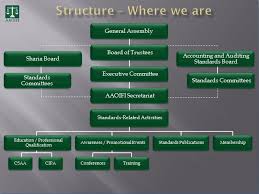
Hasil gambar untuk The need of accounting standards for Islamic financial institutions: evidence from AAOIFI          At present, Islamic banks represent the majority of Islamic financial institutions (IFIs), which are spread locally and internationally across both Muslim and non-Muslim countries. The emergence of Islamic banking is due to the increasing demand from Muslims communities worldwide for Shari’ah complied Islamic financial products, services and the variety of modes of Islamic finance. However, Islamic banking is evolving and growing at a rapid rate with an impressive record of more than 200 IFIs operating in 63 Islamic and non-Islamic countries (Maali and Napier, 2010). The past ten years saw high growth in the number of IFIs around the world that has attracted major Western institutions such as Citibank, HSBC, and Deutsche Bank, which operate Islamic windows within conventional banks (Maali and Napier, 2010). Furthermore, given the rate of growth of the IFIs, the continuous sustainability of the development by IFIs in both Islamic and non-Islamic countries needs Islamic accounting standards otherwise called accounting and auditing organization for Islamic financial institutions.
          (AAOIFI) accounting standards due to the unique characteristics coupled with the growing demand of IFIs’ products and services so as to facilitate and enhance the credibility and reliability of the financial statements and reports. It is argued that the current standards which are based on conventional framework seem insufficient to guide the IFIs. 
Currently, the various IFIs apply different accounting standards in their preparation of their accounts due to the absence of Islamic accounting standards (Zaini, 2007). The trend towards the AAOIFI standards has become a pressing issue that has generated heated debate among Organization of Islamic Cooperation countries.
         The needs for accounting standards and IFIs are emphasised in the Quran: [...] Never get bored with recording it, however small or large, up to its maturity date, for this is seen by Allah closer to justice, more supportive to testimony, and more resolving to doubt [...] (al-Baqara: 282) (Tag El-Din, 2004). 
              In addition, “Those who eat Ribaˆ (usury) will not stand (on the Day of Resurrection) except like the standing of a person beaten by Shaitaˆn (Satan) leading him to insanity.” That is because they say: “Trading is only like Ribaˆ (usury)”, whereas Allaˆh has permitted trading and forbidden Ribaˆ (al-Baqara: 275). Based on the above quoted verses of the holy Quran, Allaˆh has permitted trading and forbidden Ribaˆ (usury). For that, Allah sent his Prophet Mohammed (S.A.W) to teach the Ummah and guide them. Over the years, Islam has gained tremendous popularity and is currently recognized as the second largest and fastest growing religion in the world. Islam does not only lead to ritualistic religion confined to individuals rather, it also involves an integrated way of life that combines politics, economics, culture, religion and every aspect of human life (Hameed, 2001). Based on the fact that, Islam is a belief system that unites about 1.2 billion people around the world which approximately constitutes one-quarter of the global population(Masood and Tahir, 2008), it is necessary that, Muslims develop and embrace a unique economic system (Islamic Economic System) to meet their needs. In this regard, IFIs have been established to fulfill this need by helping the Muslims community to avoid Ribaˆ (usury) in their financial engagement and daily financial transactions. One of the IFIs is Islamic banks. Islamic banks transactions as reflected in the financial reporting are prepared under a variety of accounting standards which pose a threat to its unique accounting and reporting system. Thus, Islamic accounting standards will ensure a compatible accounting system. This, therefore, led to the growing aspiration for a financial statement that has the potential to enhance the credibility of financial statements that are in accordance with the Shari’ah, and the need to make the Islamic accounting standards relevant. 
             However, before the implementation of the Islamic accounting standards such as AAOIFI by IFIs, it is necessary to ascertain whether AAOIFI accounting standards are appropriate and suitable for Islamic banks, and whether the compliance with the AAOIFI accounting standards may disclose more information to users in order to create confidence among investors and the public to invest their money in these sectors.
           Islamic banks operate mainly in developing countries-for example, the Middle East, Africa, and South-East Asia. These countries are facing accounting problems in their practice due to dissimilar accounting standards adopted to prepare financial reporting. For instance, financial institutions in Jordan, the UAE and Qatar are officially required to comply with the IASs. Meanwhile, in countries such as Saudi Arabia, the authorities require compliance with both IAS and local accounting standards. In Malaysia, there are national accounting standards (MASB) which are based on IAS (Ahmed, 2002). Beginning January 2012, Malaysian accounting standards are in full congruence with the IFRSs.
                Therefore, researchers in the area of financial reporting for IFIs have conducted a considerable number of studies to investigate the Islamic banks’ compliance with accounting standards. Until recently, one of the main problems facing Islamic banking includes a lack of standardized accounting and auditing standards (Pomeranz, 1997). However, conventional accounting is inappropriate for Muslim users and Islamic organizations according to Hameed (2001), and it is inappropriate to impose unmodified Western accounting practices on developing countries (Karim and Tomkins, 1987). In addition, IASs based on such techniques would create difficulties for Muslims around the world. Therefore, it is imperative for the Muslim accountants to develop accounting standards which are specially adapted to Islamic needs, and for Muslim countries (Shadia, 2007).
Basically, there is a lack of evidence regarding the adoption of the Islamic accounting standards and analysis of Islamic banking principles under national Shari’ah advisory council, central bank roles, political system and economic structure. Moreover, the major problem is in the adoption of accounting standards and disclosure in IFIs that is still based on the conventional accounting philosophy (Harahap, 2003). It is argued that the adoption of accounting standards by Islamic banks will help to enhance their credibility and fuel their growth worldwide (Ariss and Sarieddine, 2007). However, the rapid development of IFIs requires standards for disclosing information, satisfying not only the general standards of disclosure but also standards relating to Islamic values (Harahap, 2003).  
The actual practice and the level of implementation of the Islamic accounting standards such as AAOIFI requirements among Islamic banks are currently unknownand needs to be investigated. Based on the fact that, these requirements are voluntary in some countries, as well as due to the absence of authorities to implement Islamic accounting standards, IFIs are currently applying different accounting standards in their financial reporting. Thus, diversities exist in terms of their class structure, political systems, legal systems, financial systems, educational systems, and the very nature of conducting business and business ownership (Choi and Meek, 2005). Furthermore, the problem may be due to lack of representative of the diverse environment factors as a result of adopting or complying with different accounting standards by Islamic banks. These differences among countries would dictate different accounting practices that reflect the environmental factors of each country. A single harmonized standard of accounting practices would be inappropriate and not representative of all the varied environmental factors exhibited in global markets (Lovett, 2002). However, accounting standards are used to generate comparable and reliable accounting information to help investors, creditors and other users to make investment decisions. These standards reflect the culture, history, and other characteristics of accounting problems facing those countries (Abongwa, 2006).
                      Due to the current different regulatory requirements and legislations, the relevance and comparability of financial statements are the foundations upon which accounting standards are predicated. Lovett (2002) documented that, with financial statements prepared under different accounting standards a problem may exist in: . comparability of financial statements prepared globally; and . reliability and creditability. The Accounting Standards Steering Committee (ASSC) was a self-regulatory private sector body, and ASSC became the Accounting Standards Committee in 1975 in the UK (Whittington, 1989). Similarly, the AAOIFI Committee is a self-regulatory private body. Both ASSC and AAOIFI brought in leading accountancy bodies to prepare and develop accounting standards relating to recognition, measurements and disclosure. Furthermore, ASSC and AAOIFI are professional bodies sponsored by charted institutions and are non-profit corporate and independent organizations. The AAOIFI is supported by institutional members (200 members from 45 countries) including central banks, IFIs, and other participants from the international Islamic banking and finance industry, worldwide (AAOIFI, 2010a, b). Similarly, ASSC is also an independent body sponsored by some chartered institutions (the Irish and Scottish institutes) (Whittington, 1989).
        By using the same approach of Solomons Reports 1989 to address this issue, the AAOIFI’s current problem is lack of authority. Similarly, the main problem to impose accounting standards in the UK is lack of authority as well as ASSC failure to avoid controversy by accommodating the needs of pressure groups (Whittington, 1989). Similar problem is being experienced by AAOIFI which does not have authority to impose Islamic accounting standards globally. This is due to differences among member countries to adopt AAOIFI standards in their respective countries.
          However, regarding comparability, reliability, and creditability of financial reporting globally or locally, Callao and La´inez (2007) pointed out that, local comparability is negatively affected if both the IFRS and local accounting standards are applied in the same country at the same time. In a related study, Mutter (1993) stated that, it can be argued that the adoption of IASs would benefit many users of accounting information, who demand comparable and reliable information.
in aditional Haverty (2006) found that, lack of comparability is mainly caused largely by the revaluations of property, plant and equipment (IAS 16) permitted under IFRS, but not permitted under US GAAP.
                Global accounting standards are perceived by a segment of the financial community as the solution to this problem, while other members of the community adhere to the philosophy of maintaining individual, national accounting standards (Lovett, 2002). In the adoption process of the accounting standards, influences that affect the rate of adoption are identified. These influences cause changes in the attitudes of participants in a social system towards the adoption of accounting standards. The influences and their effect on the rate of adoption are what need to be studied in order to interpret the association of the variables influencing the adoption of accounting standards (Lovett, 2002).
Moreover, diversity in IFIs practices means that, there are practices that have not been covered by Islamic accounting standards (AAOIFI) or any accounting standards that are in line with Shari’ah principles. Therefore, developing unique accounting and auditing standards for the dissemination of such information about IFIs becomes a necessity (Tag El-Din, 2004). Islamic banks worldwide prepare their financial statements using variety of accounting standards either IASs or local accounting standards, the problem may exist in the practices and the level of understanding among accountants and the level of compliance of Islamic banks global (KPMG and ACCA, 2010, Report). Thus, the need for Islamic accounting standards may possibly be the right way to resolve these issues. In this regard, there have been arguments in previous studies that, because of the unique transactions of Islamic banks, conventional accounting rules such as the IFRSs are not compatible to Islamic banks (Maali and Napier, 2010). This is because, in the IFIs, depositors’ funds are not guaranteed, and customer deposits cannot be reported as liabilities in the balance sheets of Islamic banks. Recently, however many Islamic banks have been adopting the accounting standards set by AAOIFI (Maali and Napier, 2010). Therefore, understanding factors affecting the levels of compliance with the Islamic accounting standards (AAOIFI) need to be investigated in the future studies.
Furthermore, the acceptability and understanding of the role of the Islamic accounting standards (AAOIFI) can be of high significance for policy implications, regulators, and standard setters. Currently, the evolving literatures surrounding the interpretation of the levels of compliance with the accounting standards for IFIs generated a heated debate among the researchers. Thus, this paper aims to provide answers to the current debate. A clear understanding and acceptability have the potential to lead to more compliance with Islamic accounting standards such as AAOIFI. Therefore, it is uncertain to determine whether the Islamic banks would switch to the AAOIFI standards or adopt a combination of both of the AAOIFI and local standards.
 It is therefore necessary to ask the following question: do we need Islamic accounting standards?

Furthermore, the acceptability and understanding of the role of the Islamic accounting standards (AAOIFI) can be of high significance for policy implications, regulators, and standard setters. Currently, the evolving literatures surrounding the interpretation of the levels of compliance with the accounting standards for IFIs generated a heated debate among the researchers. Thus, this paper aims to provide answers to the current debate. A clear understanding and acceptability have the potential to lead to more compliance with Islamic accounting standards such as AAOIFI. Therefore, it is uncertain to determine whether the Islamic banks would switch to the AAOIFI standards or adopt a combination of both of the AAOIFI and local standards. It is therefore necessary to ask the following question: do we need Islamic accounting standards?

AAOIFI had tended to start with objectives established in contemporary accounting thought, test these objectives against Islamic Shari’ah, and accept those that are consistent with Shari’ah and reject those objectives that are not consistent with Shari’ah (Maurer, 2010). The objectives of the AAOIFI organization is to prepare and develop accounting, auditing, governance and ethical standards relating to the activities of IFIs. According to AAOIFI (2008) the objective of financial accounting for Islamic banks and IFIs are as follows: . To determine the rights and obligations of all interested parties, including those rights and obligations resulting from incomplete transactions and other events, in accordance with the principles of Islamic Shari’ah and its concepts of fairness, charity, and compliance with Islamic business values. . To contribute to the safeguarding of the Islamic bank’s assets, its rights and the rights of others in an adequate manner. . To contribute to the enhancement of the managerial and productive capabilities of the Islamic bank and encourage compliance with its established goals and policies and, above all, compliance with Islamic Shari’ah in all transactions and events. . To provide, through financial reports, useful information to the users of these reports, to enable them to make legitimate decisions in their dealings with Islamic banks. In reference to the above objectives, this research attempts to contribute to the current framework and serve as a guide for IFIs regarding interest free transactions through determining the levels of compliance with the AAOIFI accounting standards by Islamic banks.

               The adoption or compliance with the AAOIFI accounting standards and IFRS has become the focus among IFIs. The objectives of the AAOIFI accounting standards are to prepare and develop accounting, auditing, governance, ethical, and Shari’ah standards relating to the activities of IFIs. Based on the stakeholder theory, this paper discussed the importance of the AAOIFI accounting standards for IFIs globally. The AAOIFI accounting standards for IFIs that are in accordance with the Shari’ah requirements are the best choice for increasing foreign investments and investor’s confidence among Muslim societies and economies. AAOIFI through its global network has also persuaded regulatory authorities to adopt its standards, but until now AAOIFI has not been fully successful. It does not have the power to enforce its standards on IFIs globally. It is strongly recommended that Muslim countries should give full support to AAOIFI standards by adopting and making them mandatory for all IFIs.

Jumat, 13 April 2018

The Critical Mission of Muslim Economist

The Critical Mission of Muslim Economist 
By: Asad Zaman


Hasil gambar untuk The Critical Mission of Muslim Economist                     Dr. Iqbal has given a clear picture of the accomplishments of these last. I would like to match the achievements against the goal: what are we trying to accomplish as Muslim economists? The mission that we are trying to fulfill started as a historical necessity. When Muslims struggled for freedom from colonization all over the world, it was necessary for them to take a stand on how they would organize the country after liberation. One of the important elements in the demand for freedom was that idea that Muslims would be free to practice their religion, which offered a complete social, political and economic system. Muslim leaders all over the world appealed to Muslims to participate in the struggles for liberation in the name of Islam. Our vision was that the Islamic system would eliminate oppression and injustice, provide equal opportunities for all, eliminate poverty, and in general be far superior to capitalism and communism. The crucial question that faces us as Muslim economists is: are we ready for the challenge of constructing an ideal Islamic system? Can we give appropriate advice to governments which wish to Islamize their systems? My fear is that we are currently unable to do so. The diversity of opinions among Muslim economists is extreme. We do not have any agreement on even the definition of “Islamic Economics”, and no clear model of what an ideal Islamic economic system would look like in concrete and practical terms. To get a clear idea of how critical the problem we face is, it is sobering to look at the ideas of a critic of Islamic economics. Sohrab Behdad1 writes that: Similar to other utopias, the Islamic ideal world would be a just and humane society, without the exploitation, domination, alienation, and other social ills that have afflicted the contemporary capitalist and socialist societies. [However, in practice, the Iranian revolution did not succeed in creating such a system.] Frustrated by conflicts between the Parliament and the Ulema, one of the followers of Khomeini said: “Ten Years after the Islamic Revolution, … [we] ask you … to present to the world the unadulterated Muhammadan Islamic view on economics“. In June 1989 Ayatollah Khomeini died, unable to define his version of Islamic economic order. It has become apparent that an Islamic economic system is not capable of presenting a viable social alternative. He goes on to say that having failed to present any distinctive Islamic system, with any clear advantages over the capitalism, Iran has gone back to follow World Bank and IMF, and abandoned their initial claims that an Islamic system would help the poor and the oppressed, or indeed that there exists a distinct Islamic economic system. An equally dangerous example for us is the history of how Christians legitimized interest. This is detailed in Jones2 . After complex maneuvers quite similar to what Muslims are currently engaged in, the public gradually came to realize that there was no difference between “Christian“ system and interest, and stopped using complex means to accomplish simple goals. To explain this in the Islamic context, consider the tremendously successful “Sukuk”. This is a very complex legal maneuver which basically replicates what a standard Western bond issue does with much greater simplicity. It does not offer any social benefits, or further any Islamic goals of any type. Ultimately, people will ask, why should we go through this complex dance, when exactly the same thing can be done in a much easier way? In general, a group of Muslim economists/fuqaha are working on attempting to replicate Western financial structures by studying loopholes in Islamic laws. If they are successful, we will find ways to legitimize all Western financial methods. Then we will successfully replicate the Western system within Islamic forms. But this really means that there is no Islamic system as such – obviously an imitation Western system will produce what it currently does: exploitation, injustice and economic misery. This shows that the task facing us as Islamic economists is very critical. Unless we succeed in providing a genuine alternative to Western models, the idea of Islamic economics will be swept away. All the claims that we made for providing justice and ending exploitation and misery will be shown to be false. Currently, I believe too much effort is being made on forms and laws, and insufficient attention is being paid to the spirit and the heart of the Islamic economic system. After substantial study of the two systems, I have come to the conclusion that the central difference between them is that the western system is based on greed and competition, while the Islamic system is based on generosity and cooperation. The practical problem that faces us, both as Muslims, and as economists, is how to get from here to there? We need to find ways of Islamizing the economy which conform to both the spirit and the form of Islamic law, instead of just the form, which is taking up most of the current efforts of Islamic economists. Before we discuss practical suggestions for this, we pause to contrast the spirit of Islamic and Western financial systems.
       blems on the basis of wrong assumptions and misunderstandings regarding the Western economic systems. Just like the wrong medicine administered on the basis of a misdiagnosis will fail to cure the disease, so our attempts at building an Islamic economic system have not been very successful on either a theoretical or a practical front. Three commonly held ideas are, I believe, major errors and obstacles in the path to progress: 1. Western economic theory is, on the whole, a sound way of analyzing economic affairs of men, just like Western Physics provide good theories about natural laws governing the world and Western Engineering provides excellent machines and physical structures. This idea leads to the concept that Islamic Economics = Western Economics + Zakat – Interest. That is, with minor changes required by Islamic laws, we can adopt Western economic theories and institutions and financial structures to our purposes. My article entitled “A Prelude to Islamic Economics“, disputes this idea. I argue that Western economic theory is fundamentally flawed. In general Western social science is based on a false understanding of the nature of human beings; this cannot be compared with Western physical science which deals with particles and laws of nature. This means that Islamic economics cannot be built by making modifications, minor or major, to western economic theories. We must build from scratch, on grounds traced by Muslim pioneers, starting from fundamental principles. 2. Current Western social, political and economic institutions represent a good way of dealing with modern problems. We need to find ways to imitate these within the Islamic legal structure. In fact, Western institutions in all areas arise out of secular modern ideologies which are fundamentally incompatible with the Islamic worldview. We cannot adopt their institutions into an Islamic framework since their spirit is not compatible with ours. This makes our task doubly difficult, since we cannot go back to our past for solutions either. Modern problems are genuinely new problems, and require new solutions; however, we cannot use Western solutions. We can look to our traditions for guidance and learn about the spirit of an Islamic approach to solutions, but we must devise creative new solutions. I have argued this at length in my paper “Islamic Economics: A Survey of the Literature“.
      The Muslims invented the concept of higher education and gave it to the whole world. Goody5 has documented how the Muslim universities of Spain were copied by Europe, and how this knowledge was suppressed in the historical accounts6 . Similarly, in other cultures, education was regarded as a luxury good, to be given only to a special few. Muslims invented the concept of universal education, as well as education for women, and gave it to the whole world; see Shalabi7 . In the meantime, Reuben8 has described how the American universities were forced to abandon the idea that education was meant to develop character, and resulting damage done to higher education. Today, youth in American universities can learn how to create atom bombs, but nothing about the ethics of killing innocents. They can learn how to cut out and replace hearts but nothing about the feelings of love, compassion, and the fear of God that are needed to purify the hearts. There are many aspects of Western methodology, both in teaching and in social science, which are in conflict with Islam. A detailed discussion is given in my article “Islamic Economics: A Survey of the Literature”. Here I deal with only one; the idea that a scientist must be a neutral and detached observer. Our methodology is to struggle to change ourselves and others, to bring the world in conformity with the orders of Allah. This struggle is meant to bring about inner spiritual transformation, and bring us closer to God: Q29: 69 And those who strive in Our (cause),- We will certainly guide them to our Paths: For verily Allah is with those who do right. 
          The Prophet Muhammad (May Allah shower his peace and blessings upon him) was the best teacher in all of human history; with his example before us, it is shameful to look to other models for education. The effect of his training transformed people who were near savages (burying their daughters alive and killing each other over minor issues) to models of civilized behavior for all time to come. Today this type of training is not available anywhere in the world, including Muslim countries. Because of the general decline in morals, the world is beginning to look like Jahilliya. More than 600 mothers kill their own children in the USA every year, and trillions of dollars of are spent on killing innocents and destroying infrastructure, putting to shame the savagery of earlier times. Our only hope is to re-learn our traditions, which contain complete guidance on how to achieve spiritual transformation. At the core is the idea that all our prayer, and our striving, and our living and our dying should be devoted solely to Allah, the Sustainer of the worlds. Q13: 11 … Verily, God does not change men's condition unless they change their inner selves … God has entrusted this Ummah with the mission to convey his message to all of mankind. Today, with a general decline in morals, character and integrity, this has become an urgent need. Instead of the passive and detached observer role of the Western scientist, we must become passionately engaged in actively solving the problems facing the Ummah. All praise is for Allah alone; may He guide us all to the right path, and make us among those who sell their lives and wealth for his pleasure.

Mahabbah

 Cinta itu  laksana sebuah perang,  amat mudah mengobarkannya,  namun amat sulit untuk memadamkannya   Ketika kita mencintai,  perasaan kita...